Have you ever wondered why some actions feel irresistible the moment a particular cue appears, while others require a day-long internal pep talk?

Buy The Dopamine & Habit Formation Guide
What Is The Relationship Between Dopamine And Habit Formation?
If you want a short answer, think of dopamine as a social calendar for your brain: it whispers which events are likely worth attending again. The long answer is messier, more interesting, and involves a cast of brain regions that behave like a neighborhood association that mostly argues about where to put the recycling bin.
What Is Dopamine?
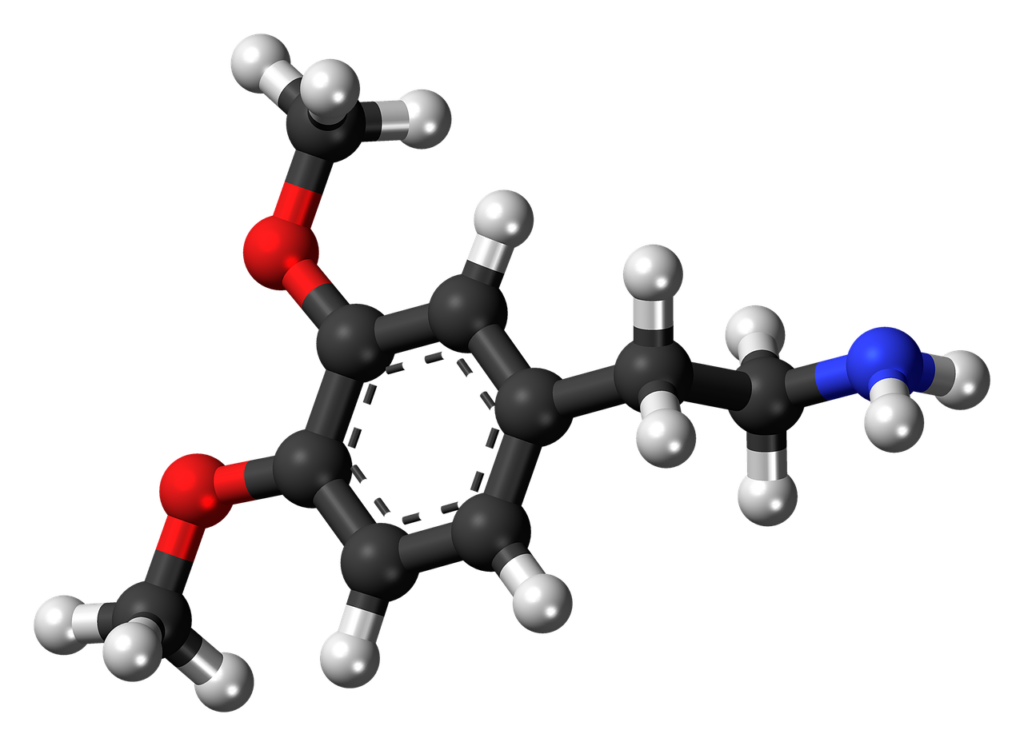
Dopamine is a chemical messenger that neurons use to communicate, and it plays roles in movement, motivation, learning, and reward processing. You might picture dopamine as the brain’s reward currency, but that image is incomplete and a bit like describing a Swiss Army knife as “a small folding knife.”
Dopamine as neurotransmitter and neuromodulator
Dopamine acts both as a fast-acting neurotransmitter that sends brief signals and as a neuromodulator that changes how entire circuits respond over longer periods. This duality means dopamine can prompt immediate actions (like flinching at a loud noise) and slowly adjust how likely you are to repeat behaviors.
Dopamine and pleasure: a common misconception
You may have heard that dopamine equals pleasure; that’s a simplistic slogan. Dopamine signals are more accurately linked to prediction, motivation, and learning — it tells you what is worth paying attention to, not just what feels good in the moment.
Purchase The Habit-Building Toolkit
Key Dopamine Pathways in the Brain
Dopamine originates from a few small clusters of cells and fans out to many brain areas. Each pathway contributes differently to behavior and habit formation, and knowing the main players helps you see how habits get entrenched.
Mesolimbic pathway
This pathway runs from the ventral tegmental area (VTA) to the nucleus accumbens and is heavily involved in reward processing and motivation. When something surprising and rewarding happens, neurons here often fire bursts of dopamine, flagging that event as noteworthy.
Mesocortical pathway
From the VTA to the prefrontal cortex, this pathway influences decision-making, planning, and working memory. It helps you weigh options and exert control over impulses — the part of you that might veto eating the entire pint of ice cream at 2 a.m.
Nigrostriatal pathway
This route from the substantia nigra to the dorsal striatum is central to movement and habit learning. When habitual behaviors become automatic, this pathway often shoulders much of the load.
Tuberoinfundibular pathway
Less famous for habits, this pathway connects the hypothalamus to the pituitary and helps regulate hormones like prolactin. It’s not a primary player in habit formation but reminds you that dopamine does a lot of jobs.
| Pathway | Origin | Major Targets | Role in habits |
|---|---|---|---|
| Mesolimbic | VTA | Nucleus accumbens | Motivation, reward prediction, early reinforcement |
| Mesocortical | VTA | Prefrontal cortex | Decision-making, goal-directed behavior |
| Nigrostriatal | Substantia nigra | Dorsal striatum | Motor control, habitual action execution |
| Tuberoinfundibular | Hypothalamus | Pituitary gland | Hormonal regulation (indirect role) |
What Is a Habit?
A habit is a behavior that runs on autopilot in response to a context or cue, often without much conscious thought. Habits save you mental energy by delegating frequently repeated tasks to brain circuits that operate efficiently and with minimal attention.
The habit loop: cue, routine, reward
You encounter a cue (time of day, location, emotional state), you perform a routine (grab coffee, check your phone, portion out snacks), and you receive a reward (caffeine kick, novelty, tasty sugar). Over time, this loop strengthens — the cue increasingly triggers the routine because the brain learns the routine leads to reward.
Why habits feel automatic
Once a habit is well-established, control shifts from flexible, deliberative systems (your metaphorical executive assistant) to more rigid, efficient circuits (your autopilot). That shift reduces cognitive load, but it also makes habits hard to change because they no longer rely on conscious evaluation.
Get The Complete Guide To Dopamine And Habits
How Dopamine Interacts with Habit Formation
This is where neuroscience gets dramaturgical: dopamine signals guide learning by flagging surprises, predicting rewards, and adjusting future behavior. You can imagine dopamine as a gossip network announcing which behaviors changed outcomes and therefore deserve to be repeated.
Reward prediction error: the dopamine memo
Neurons signal a reward prediction error when actual outcomes differ from expectations: more dopamine when a reward is better than expected, less when it’s worse, and baseline when things match predictions. This error signal guides learning by updating expectations about what actions lead to good outcomes.
From goal-directed to habitual: the transfer of control
When you first learn a behavior, it tends to be goal-directed: you do it because you want a specific outcome and you evaluate consequences. Dopamine-rich circuits in the ventral striatum and prefrontal cortex support this phase. With repetition, control often transfers to the dorsal striatum and nigrostriatal dopamine signaling, making the behavior habitual and less sensitive to outcome value.
Phasic versus tonic dopamine in habit formation
Phasic dopamine refers to brief bursts of transmission linked to prediction errors and learning signals, while tonic dopamine describes baseline levels that modulate motivation and vigor. Phasic bursts help stamp in associations between cues and outcomes; tonic levels can influence how much effort you’re willing to expend to get a reward.
Habit consolidation and automaticity
Over time, synaptic changes occur in striatal circuits that solidify cue-action links. Dopamine contributes to plasticity, strengthening connections that correspond to rewarded actions. As these circuits become robust, the behavior becomes automatic, executed with minimal cognitive oversight.
| Dopamine Mode | Timescale | Primary Effect on Habit |
|---|---|---|
| Phasic bursts | Milliseconds to seconds | Encode prediction errors, support learning of cue-action associations |
| Tonic levels | Seconds to minutes (and longer) | Modulate motivation, general readiness, and vigor of behavior |
Animal Evidence: The Classic Experiments
A lot of what we know about dopamine and habits comes from controlled animal studies that can manipulate neurons precisely and observe changes in behavior. These studies are rigorous but not always glamorous; they often involve hungry rats and an alarming number of levers.
Lesions and inactivation studies
When researchers lesion parts of the striatum or interrupt dopamine signaling, animals often fail to form habits or perform habitual actions. These manipulations helped identify which circuits are necessary for transitioning from goal-directed actions to habits.
Optogenetics and temporally precise control
Modern tools allow scientists to switch dopamine neurons on or off with light. When dopamine bursts are artificially timed with particular actions, animals learn to repeat those actions — strong evidence that phasic dopamine drives learning. You can almost imagine the neuron holding up a flashing sign: “Remember this. Very important.”
Reinforcement schedules and habit strength
Studies show that variable and intermittent rewards — like the ones you get from slot machines or social media notifications — are powerful at producing persistent habits. Dopamine signals respond especially strongly to unexpected rewards, explaining why unpredictability is habit-forming.

Human Evidence: Imaging, Pharmacology, and Behavior
You are not a rat, but human studies converge with animal research to show similar principles: dopamine predicts learning, imaging reveals striatal shifts, and drugs that affect dopamine change habit-related behaviors.
fMRI and PET studies
Functional imaging shows that early in learning, the ventral striatum and prefrontal areas are active; with repetition, dorsal striatal activity increases. PET scans tracking dopamine receptors can reveal how dopamine signaling relates to propensity for certain habitual or compulsive behaviors.
Pharmacological manipulations
Medications that boost or block dopamine can change how quickly people form habits or how motivated they feel. For instance, drugs used for Parkinson’s disease — which affect dopamine — sometimes cause compulsive behaviors like pathological gambling, indicating the delicate balance between motor control, reward, and habit.
Behavioral experiments with humans
Classic experiments where people learn stimulus-response associations under different reward schedules show that unpredictability and variable reinforcement strengthen habit formation. Even small, intermittent rewards can make behaviors stick.
Dopamine, Reward, and Motivation: Sorting the Roles
It helps to separate what dopamine does: it teaches what predicts reward, it energizes action, and it modulates attention and salience. These roles combine to make certain actions more likely to recur.
Dopamine as prediction and learning signal
When outcomes surprise you, dopamine helps you update expectations. This is the cognitive engine that helps translate a one-off success into a repeated strategy.
Dopamine as motivational fuel
Higher tonic dopamine can make you more willing to work for rewards and to initiate actions. If you’ve ever been inexplicably more industrious after a good night’s sleep, changes in tonic dopamine may be part of the explanation.
Dopamine and salience
Dopamine helps flag stimuli that deserve attention. If a cue becomes salient — the sight of a coffee shop that now predicts a perfect latte — dopamine helps make you notice it and act.

How Addiction Relates to Habit Formation
Addiction is, in many ways, a hijacking of normal habit systems by substances or behaviors that strongly activate dopamine circuits. But addiction is not just strong habit; it involves compulsion, craving, and often a breakdown of control systems.
Reinforcement amplification and craving
Substances that cause large dopamine surges can accelerate the formation of cue-action associations and may overvalue particular rewards. Over time, cues tied to the substance become intensely salient and trigger craving and habitual seeking.
The distinction between habit and compulsion
A habit may be automatic; a compulsion is driven by overwhelming urges and often persists despite adverse consequences. Dopamine contributes to both, but addiction typically involves broader changes in motivation, stress systems, and cognitive control networks.
Practical Strategies: Using Dopamine Knowledge to Build Better Habits
Now for the useful part: how you can use this understanding to form positive habits and avoid negative ones. Think of this as behavior engineering with a charmingly unreliable neural foreman.
Make rewards immediate and predictable at first
Early in learning, strong and consistent rewards strengthen associations. If you’re trying to habitually exercise, reward yourself immediately after the session — a few minutes of a favorite podcast, a healthy treat, or a visible checkbox on a calendar.
Use cues deliberately
Because cues trigger habitual responses, design your environment so that desirable cues are inevitable and undesirable cues are hidden. If you want to write each morning, leave your notebook on your pillow so reaching for it becomes as natural as turning off the alarm.
Leverage variable reinforcement wisely
Intermittent rewards are powerful but can make habits hard to control. If you’re building a behavior you want to persist, an occasional surprise reward can help. If you’re trying to quit a behavior, be careful about accidentally introducing unpredictable rewards that reinforce it.
Increase friction for bad habits
Make undesirable routines harder to perform. If you want to reduce scrolling, put your phone in another room or remove tempting apps. Habits thrive on ease; forcing a tiny obstacle can cut their power.
Build routines around stable cues
Habits form more readily when the context is consistent. Pair a habit with something you do reliably, like brushing your teeth or starting your morning coffee. The brain loves repetition in a predictable setting.
Reward progress, not perfection
Dopamine responds to small wins. Acknowledge tiny improvements, because the reinforcement will help the behavior stick. If you’re trying to learn a language, celebrate completing a five-minute lesson rather than berating yourself for missing an hour.
| Strategy | Why it works | Example |
|---|---|---|
| Immediate, consistent rewards | Strengthens cue-action associations | Treat after a workout |
| Deliberate cues | Ensures predictable triggers | Running shoes by the door |
| Variable reinforcement | Increases persistence | Occasional surprise reward |
| Increase friction | Reduces automaticity | App blockers for social media |
| Pair with stable behavior | Leverages existing routines | Study right after lunch |
Breaking Bad Habits: Applying Neuroscience to Change
Stopping an established habit requires more than willpower because the behavior has been offloaded to circuits that run efficiently without your permission. You need to interrupt cues, change rewards, and rewire associations.
Identify and alter cues
Track when the habit happens. Is it boredom, stress, a particular time of day? Once you identify the cue, change the context or remove it. If the cue is “9 p.m. TV time,” change the environment: move the remote, rearrange the living room, or add a different activity.
Substitute the routine and modify the reward
Because the brain is looking for the reward more than the specific routine, replace the routine with a healthier option that still provides a satisfying outcome. Craving a sugary snack? Substitute fruit or a short walk that gives a dopamine lift.
Use extinction principles
If a cue no longer brings the expected reward, the association weakens. That’s extinction: repeatedly presenting the cue without the reward reduces the behavior. Be patient; extinction can be slow and context-specific, so relapses are normal.
Strengthen goal-directed control
Practice mindfulness and decision-making strategies that engage prefrontal circuits. When you make an explicit plan (“If X happens, I will do Y”), you recruit goal-directed systems to counteract automatic responses.
Social and structural strategies
Tell others your goals, change social contexts, or adjust schedules. Social accountability and structural change act like scaffolding to let new neural patterns form.
Specific Techniques That Work (Evidence-Based)
There are several concrete, empirically supported techniques for habit change that map well onto dopamine and habit neuroscience.
Implementation intentions
Formulate clear if-then plans: “If it’s 7 a.m., then I’ll go for a 15-minute walk.” These plans make responses to cues more automatic in a helpful direction and reduce the cognitive load when the cue appears.
Habit stacking
Attach a new habit to an existing one. Because the cue is already reliable, you piggyback the new behavior onto it, which speeds learning.
Gradual shaping
Start with tiny behaviors and build up. Small wins produce dopamine and lead to progressive increases in behavior without triggering demotivating failures.
Habit reversal training
Become conscious of precursors and substitute actions, often used in clinical contexts for tics and compulsions. This technique emphasizes awareness and replacement routines.
Pharmacology, Neuromodulation, and Ethics
Medical interventions can affect habit-related circuits, but they come with trade-offs. You should be cautious about seeing medications as shortcuts for behavior change.
Drugs that modify dopamine
Dopamine agonists and antagonists change motivation, reward sensitivity, and sometimes habitual behaviors. In therapeutic contexts, they can relieve symptoms (Parkinson’s disease motor deficits), but they may also cause unwanted compulsive behaviors.
Deep brain stimulation and neuromodulation
In severe psychiatric or neurological conditions, interventions like deep brain stimulation can modulate habit circuitry. These are powerful tools, with ethical and practical considerations about identity, autonomy, and side effects.
The ethics of manipulating habits
Whether through technology, pharmacology, or advertising, influencing habit formation raises questions about consent and manipulation. Understanding how dopamine works invites responsibility about how you use that knowledge on yourself and others.
Common Misconceptions Clarified
It’s easy for simplified headlines to create myths about dopamine and habits. Here are a few corrections that will make your conversations at dinner parties more accurate.
“Dopamine equals pleasure”
Dopamine signals prediction, salience, and motivation more than raw pleasure. Pleasure is a complex experience that also involves opioids and many other systems.
“You can’t change habits because they’re in your brain”
You can change habits — the brain is plastic and responsive to new contingencies. It’s just easier to change the environment and rewards than to rely only on willpower.
“More dopamine is always better”
Too much or too little dopamine can be harmful. Excessive dopamine signaling can promote compulsive behaviors, while insufficient dopamine impairs motivation and movement.
Frequently Asked Questions
These quick answers address common curiosities you might have after reading so far.
Q: How long does it take to form a habit? A: It varies widely. Some simple habits can become automatic in a few weeks, while complex behaviors may take months. The key factors are consistency, reward strength, and cue stability.
Q: Can habits be unlearned completely? A: Associations can weaken (extinction) and be replaced, but traces may remain. That’s why relapses are common; context often brings back old patterns.
Q: Does willpower matter? A: Yes, initially. Willpower helps you bridge the gap until circuits consolidate the new habit. But relying solely on willpower is energy-consuming and less sustainable than changing cues and rewards.
Q: Are some people more prone to forming habits? A: Individual differences in dopamine function, genetics, and environment all play roles. Personality, stress, and lifestyle factors also influence how quickly and strongly you form habits.
Practical Example: Building a Reading Habit
You want to read more before bed. Here’s how to apply the neuroscience.
- Cue: Put the book on your pillow and remove your phone charger from the bedroom.
- Routine: Read for 10 minutes as soon as you get into bed.
- Reward: Allow yourself a small, pleasant ritual afterward (a decaffeinated tea) or track a streak that you find satisfying.
- Variable reinforcement: Occasionally choose an especially captivating short story as a surprise reward.
- Remove friction: Keep the book accessible and the bedroom environment inviting for reading.
These steps use cues, immediate rewards, and consistency so dopamine-based learning can help make reading automatic.
Final Thoughts
You’ve been traveling with a secretive, chatty neurotransmitter that’s been nudging you toward routines for as long as you can remember. Dopamine doesn’t simply make you feel good; it teaches, motivates, and stamps certain cue-action pairs into the circuitry of your brain. By understanding how phasic bursts and tonic levels work, and by knowing which brain regions are doing the heavy lifting, you can be less at the mercy of automatic behaviors and more of a thoughtful architect of your own routines.
If you want to change a habit, give the sensible parts of the brain a hand: engineer cues, reward progress, and be patient while neural circuits do their slow, stubborn work. You’ll probably make mistakes — that’s part of the process. Consider those missteps as notes in the margins of a very long manual you’re writing for yourself, with dopamine occasionally underlining the important bits like a mildly enthusiastic editor.
What Is The Relationship Between Dopamine And Habit Formation?