?Have you ever wondered whether your ability to read the room is the product of careful practice or simply the luck of your birth?

Buy The Emotional Intelligence Guide
Can EQ Be Learned, Or Is It An Innate Personality Trait?
If you have spent time squinting at coworkers’ faces or rehearsing sentences in front of the mirror before a difficult conversation, you probably suspect that emotional intelligence (EQ) has something to do with practice. If, on the other hand, you were the kid who always knew when Aunt Muriel had had too much sherry and therefore avoided family dinner for decades, you might believe it’s something you were born with. This article is meant to be practical, mildly amusing, and candid — like a friend who tells you you have spinach in your teeth and then explains how to floss.
What is Emotional Intelligence (EQ)?
You can think of EQ as the set of skills that help you identify, understand, manage, and use emotions — both your own and others’ — in productive ways. It includes being able to calm yourself down, recognize when someone else is uncomfortable, and steer a conversation so it doesn’t become a wrestling match over the remote control.
The concept has roots in psychology and management. While definitions vary, they all point to an ability that affects relationships, job performance, mental health, and how graceful you are at apologies.
EQ versus IQ: Aren’t they the same thing?
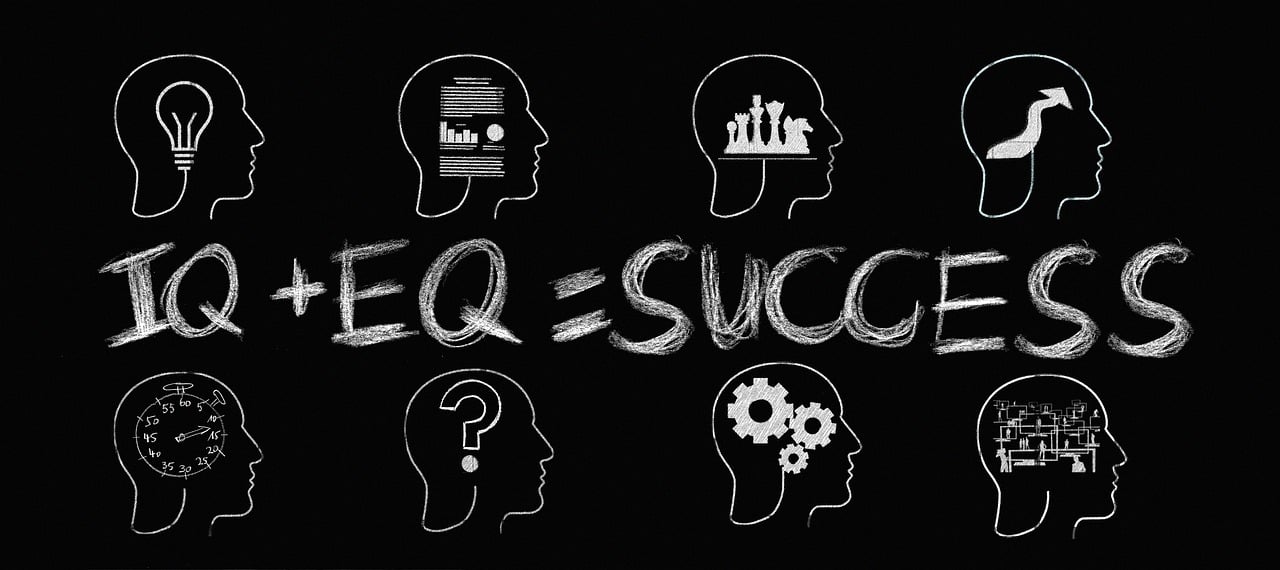
They often get compared, but EQ and IQ measure different capacities. IQ is about cognitive ability — logic, math, pattern recognition. EQ is about emotions, social skills, and self-regulation. You can be brilliant and socially clumsy, or charming and scatterbrained; the two aren’t perfectly correlated.
If you imagine EQ as the manual for getting along with people and IQ as the instruction sheet for solving a crossword, you’ll have a decent mental image.
Theoretical Models of EQ
You don’t need to memorize every theory to use EQ in life, but knowing the main frameworks can help you recognize what you can practice.
Salovey and Mayer’s model
This early model organizes EQ into four branches: perceiving emotions, using emotions to facilitate thought, understanding emotions, and managing emotions. It’s tidy and useful if you like neat categories.
Goleman’s model
Daniel Goleman popularized EQ with a broader model that includes self-awareness, self-regulation, motivation, empathy, and social skills. This model is friendlier to workplaces and leadership development programs.
Mixed models and other approaches
Some assessments mix trait-like aspects (how you generally behave) with ability-like skills (how well you perform on specific tasks). These blended views make measurement tricky but align with the messy nature of real humans.
Is EQ Innate? What the Biology Says
You probably weren’t handed a manual at birth, but biology plays a role. Genes and early brain development influence temperament, reactivity, and baseline social tendencies. Think of some aspects of EQ like eye color: influenced by heredity, but not destiny.
Genetics and temperament
Twin and family studies show moderate heritability for traits related to EQ — for example, how easily you become upset or how sociable you tend to be. That means the starting point varies from person to person.
Brain structures and chemistry
Regions like the amygdala, prefrontal cortex, and mirror neuron systems are involved in emotional processing. Their structure and connectivity affect how you perceive and regulate emotions. Neurotransmitters like serotonin and oxytocin also influence mood and social bonding.
Sensitive periods in development
Early childhood experiences shape the wiring of emotional circuits. If you were comforted when distressed and taught how to name emotions, you likely developed healthier regulation. Early adversity can make regulation harder, but not impossible to change later.
Can EQ Be Learned? Evidence from Research
Here’s where optimism gets a steady chair and a cup of tea. A substantial body of research suggests that many components of EQ can be improved through training, practice, and environment.
Training studies and interventions
Interventions aimed at preschoolers, adolescents, and adults have shown improvements in emotional recognition, regulation, empathy, and social skills. Programs in schools that teach emotional literacy often result in better classroom behavior and increased academic performance.
Neuroscience and plasticity
Your brain changes with experience. Neuroplasticity means that targeted practice — like mindfulness for regulation or role-playing for social skills — can produce measurable changes in brain function and behavior.
Limitations and effect sizes
Not all interventions work equally well. Effect sizes vary, and changes are often modest rather than miraculous. The quality of instruction, duration, and your motivation significantly affect outcomes.
Nature and Nurture: A Practical Balance
So which is it — nature or nurture? The answer is both. You may start with predispositions, but you can change many relevant skills across the lifespan. That’s good news if you feel stuck, and slightly humbling if you have always assumed you were a social savant.
Table: How Innate and Learned Factors Contribute to EQ
| Element of EQ | Innate Influences | Learned / Trainable Influences |
|---|---|---|
| Emotional reactivity | Genetics, temperament | Mindfulness, stress reduction |
| Emotion recognition | Early exposure, temperament | Training, perspective-taking exercises |
| Emotion regulation | Baseline neural circuits | Cognitive reappraisal, breathing, therapy |
| Empathy | Genetic predisposition, mirror systems | Empathy training, volunteering, listening practice |
| Social skills | Introversion/extraversion tendencies | Role-play, feedback, social coaching |
| Motivation | Temperamental baseline | Goal-setting, cognitive techniques |
This table helps you see that most skills have both inherited and learned elements. Rarely is something purely one or the other.
How to Tell if EQ Can Be Improved in You
You don’t need to be a scientist to find out whether training can help you. A few practical markers will indicate whether you’re likely to benefit.
Motivation and growth mindset
If you believe you can change and are willing to practice, your odds of improvement go way up. Motivation is a multiplier.
Baseline assessment
Take a reputable EQ assessment or get feedback from trusted colleagues and friends. Knowing where you are helps you set realistic goals.
Responsiveness to small changes
If small interventions like pausing before reacting or labeling emotions reduce conflict, you’re likely to respond well to further training.
Practical Steps to Improve Your EQ
Here is a set of actionable practices, explained in a friendly and slightly confessional tone — because you will be better if you laugh at your early missteps.
1. Build self-awareness
Self-awareness is noticing that you’re irritated before you explode like a microwave burrito.
- Keep an emotion diary for a week. Note triggers, bodily sensations, and thoughts.
- Pause before responding. A five-second delay can transform your reaction into a considered reply.
- Ask trusted people for candid feedback. If your aunt avoided you at family dinners, ask why — gently.
2. Practice emotion labeling
Naming emotions reduces their intensity and gives you access to choices.
- Use specific terms: “I feel frustrated and embarrassed” rather than “I feel bad.”
- Expand your vocabulary beyond joy, sadness, and anger; words like “dismayed,” “apprehensive,” or “satisfied” are useful.
3. Learn regulation strategies
Regulation is not suppression; it’s steering your ship rather than walking the plank.
- Cognitive reappraisal: reinterpret a situation to reduce its emotional sting. If someone snaps at you, consider that they might be stressed rather than hostile.
- Grounding techniques: breath, progressive muscle relaxation, and sensory focus work in the immediate moment.
- Habit building: regular exercise, sleep, and nutrition increase baseline resilience.
4. Improve empathy
Empathy is listening when someone speaks, not planning your rebuttal.
- Active listening: reflect back what you hear. “It sounds like you felt overlooked” is gold.
- Perspective-taking exercises: try to imagine someone’s day as if you were wearing their shoes, not their socks.
- Volunteer or help others; exposure to diverse situations increases empathic breadth.
5. Develop social skills
Social skills are navigation tools for messy human interaction.
- Practice small talk with a low-risk person, like the barista. The stakes are low and the practice is real.
- Learn to give and receive feedback gracefully. Use “I” statements and specific behaviors.
- Role-play difficult conversations with a friend or coach.
6. Use structured training and coaching
If you prefer guided change, consider courses or a coach who specializes in emotional intelligence.
- Look for evidence-based programs with measurable outcomes.
- A coach can provide personalized feedback and hold you accountable.

Exercises and Practices You Can Try
Here are concrete exercises you can use, explained as if you might actually do them.
The 10-Minute Check-In
Spend 10 minutes daily checking in with your emotional state. No devices. Name three emotions, note their intensity, and briefly write what might have triggered them.
The Pause and Reflect
Before answering emails or texts that upset you, wait 15 minutes. If that’s too long for your temperament, try two minutes. Use the time to breathe and reframe.
The Empathy Role-Play
With a friend, take turns describing a real conflict while the other practices active listening and reflecting emotions. Swap roles and give feedback.
The Gratitude Conversation
Once a week, tell someone why you appreciate them in a specific way. This fosters positive emotions and strengthens connection.
Measuring Progress
Improvement needs measurement, otherwise you’re just guessing at whether your calm is authentic or just a new brand of passive-aggressive.
Self-report scales
Tools like the EQ-i or self-rated journals can track changes. Be honest with yourself; flattery from your ego is not data.
Behavioral indicators
Look for fewer heated arguments, better performance reviews, or stronger friendships. Ask others for feedback after a few months of practice.
Objective tests
Some performance-based tests attempt to measure emotional abilities. They’re imperfect but can be useful when combined with subjective reports.

Common Myths About EQ
Beliefs about EQ often mislead people into thinking they’re stuck or that it’s all fluff.
Myth: You’re born with it and that’s it
False. You start with tendencies, but you can refine and improve skills across your life.
Myth: EQ is soft or unimportant
False. It predicts job performance, leadership effectiveness, and relationship health.
Myth: Only people in therapy can improve EQ
False. While therapy helps, structured practice, coaching, workplace training, and everyday habits improve EQ for many.
EQ in the Workplace
Your ability to understand and manage emotions affects meetings, negotiations, and team morale. Leaders with higher EQ tend to get better results and keep better people.
Hiring and leadership
Companies increasingly value EQ in leadership roles because it supports collaboration and resilience. Interview formats that assess situational judgment and behavioral responses can provide insight into a candidate’s EQ.
Team dynamics
Teams with higher emotional awareness communicate better, resolve conflict more effectively, and innovate more creatively. You will do well to be the person who knows when to say nothing and when to ask the right question.
Parenting and Teaching EQ
If you care for children, teaching EQ early pays dividends. Children who learn emotional literacy have fewer behavior problems and better social outcomes.
Model, label, and coach
Model calmness, label emotions for children, and coach them through regulation techniques. That isn’t indulgence; it’s skill-building.
Cultural and Contextual Considerations
Different cultures have different norms about emotion expression. What looks like low EQ in one context may be culturally appropriate in another. You should adapt your approach to the norms of your environment.
Table: Cultural Differences and Practical Tips
| Cultural Norm | How it Affects EQ Skills | Practical Tip |
|---|---|---|
| High-context cultures (indirect communication) | Emotion cues may be subtle | Practice attentive listening and nonverbal sensitivity |
| Low-context cultures (direct communication) | Emotions are expressed more plainly | Practice assertive but respectful expression |
| Collectivist cultures | Emphasis on group harmony | Use perspective-taking and prioritize relational outcomes |
| Individualist cultures | Emphasis on personal expression | Balance honesty with empathy for others’ feelings |
This table helps you adapt strategies to different environments without losing authenticity.
Coaching, Courses, and Professional Help
If you find self-study slow, external help can accelerate learning.
What to look for in a program
Seek evidence-based curricula, practical exercises, and measurable outcomes. Beware of programs offering overnight transformations; those are usually marketing.
Therapy versus coaching
Therapy addresses deeper emotional wounds and mental health; coaching focuses on skills and performance. Choose depending on your needs — many people benefit from both.
Common Obstacles and How to Overcome Them
Improving EQ is not effortless; you’ll encounter friction.
Resistance to change
You might prefer your old patterns because they’re familiar. Remind yourself that comfort isn’t the same as effectiveness.
Impatience for results
Skill-building takes time. Set small milestones and celebrate incremental wins.
Fear of vulnerability
Practicing empathy and self-disclosure sometimes feels risky. Start small with trusted people to build confidence.
Realistic Expectations
You will not become perfectly composed or read minds. The goal is steady improvement: fewer regrettable emails, calmer conflict management, and more meaningful connections.
Think of it as learning to play an instrument. You won’t sound like Yo-Yo Ma after a week, but with regular practice you’ll carry a tune that pleases you and perhaps your neighbors.
A Short Case Study (Anecdotal and Practical)
When you first joined a team, you might have been the person who corrected typos in emails and won every argument. Then you noticed people stopped asking for your opinion. You did some awkward coaching sessions, switched to asking clarifying questions, and practiced listening. Over months, colleagues started to return to you with real problems. That change didn’t require new genes; it required noticing patterns and doing different things consistently.
If you are the person who knows these situations intimately, this is your permission slip to keep trying. Real people change like that every day.
FAQs
How long does it take to improve EQ?
Small improvements can be seen in weeks; meaningful change often takes months to years. Consistency is more important than intensity.
Is EQ measurable?
Yes, though imperfectly. Use a combination of assessments, behavioral indicators, and feedback.
Can someone with low IQ have high EQ?
Absolutely. EQ and IQ are distinct. Some people excel at understanding and managing emotions while having average analytic skills.
Is EQ valuable in all careers?
It’s broadly valuable, though different roles require different mixes of skills. Health care, leadership, education, sales, and customer service particularly benefit from higher EQ.
Action Plan: A 12-Week Starter Program
Here’s a simple program you can follow to make measurable improvements in three months.
Week 1–2: Self-awareness
- Keep an emotion diary and notice triggers.
Week 3–4: Labeling and small regulation techniques
- Practice naming emotions and use breathing exercises.
Week 5–6: Empathy practice
- Do weekly active-listening sessions with a friend.
Week 7–8: Social skills
- Practice giving constructive feedback and small talk.
Week 9–10: Integration
- Apply techniques to real work scenarios and solicit feedback.
Week 11–12: Review and iterate
- Assess progress and set new goals.
If you treat this like a habit and not a miracle, you’ll probably be pleased with the results.
Final Thoughts
You are not irredeemably “born this way,” nor are you a self-made EQ guru from birth. EQ sits somewhere in the middle: shaped by biology, molded by environment, and sculpted by practice. With curiosity, honest feedback, and incremental work, your ability to understand and manage emotions will improve.
Imagine entering a room and being the person who senses tension and knows how to soften it without performing a theatrical apology. That person isn’t mythical — they are the result of choices and practice. You can become that person, one small, imperfect step at a time.